
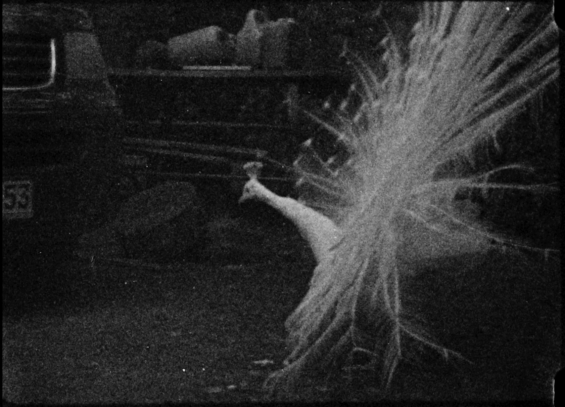
a shortfilm by Philipp Hartmann – 16mm/HD, 30 min., 2026
Ein alternder Filmemacher mit schwindender Sehkraft wartet auf einem Parkplatz auf seine Frau. Beobachtet in handentwickeltem 16 mm Film. Zwischen Supermarkt und Baumarkt, Elektronik-Discounter und Autowaschanlage denkt er nach – über die Erlebnisse beim Mittagstisch und auf der Bank in der Sonne neben Aldi, über das Geschehen anderswo in der weiten Welt, über Sonderangebote und über nicht realisierte Filmprojekte.
Ein Portrait an und von einem Nicht-Ort.
An aging filmmaker with failing eyesight waits for his wife in a parking lot. Observed in hand-developed 16 mm film. Between the supermarket and the hardware store, the electronics discount store and the car wash, he reflects on his experiences at lunch and on the bench in the sun next to Aldi supermarket, on events elsewhere in the wide world, on special offers and on unrealised film projects. A portrait at and of a non-place.
Screenings:
Upcoming screenings:
Filmfest Aachen – SO 27.9.2026, 12:30h Apollo Kino
Underdox München – MO 12.10.2026, 20h Werkstattkino
more coming soon!
Past screenings:
FID Marseille – july 2026 Winner of the FLASH Award for best shortfilm
DOC Buenos Aires – aug. 2026
Jury Statement:
Nous aimerions remettre le prix flash de notre compétition à un film qui nous a beaucoup touchées par son geste pictural et par l’espace qu’il offre à ce qui l’entoure. Par ses images qui sont à la fois ancrées avec force dans le présent tout en parvenant à s’ouvrir à une dimension intemporelle envoûtante.
Le film prend le temps d’observer, d’écouter et de laisser les rencontres fortuites advenir autour d’un parking de supermarché. Il se plaît à accueillir le réel avec une grande générosité et avec une justesse incroyable.
Catalogue Text by FID Marseille:
There are some adventurers who cross continents and others who travel only a few miles. The protagonist of Auf der Rückseite der Landschaft (The B-side of the Landscape) has wound up belonging to the second category. Every morning, Gerd Roscher accompanies his wife to her place of work and spends the rest of the day waiting for her in a retail park by the side of the road in northern Germany. His daily landscape is made up of car parks, supermarkets and electrical-appliance outlets. So what makes his experience unique?
For several decades, Gerd was an acclaimed filmmaker and professor, and his films almost always took the form of a journey. Today, he talks about these journeys from a car park and thinks aloud between his van and the restaurant that serves a local speciality. The standard definition of “non-places” is that they are places designed for movement and consumption rather than loitering. But the theory doesn’t match what we see. Guided by Roscher and Hartmann, we discover a different side. The students smoking out of sight, the pensioners eating lunch together, the regulars in the café and the occasional passers-by end up forming an unexpected community.
The film lingers on a series of paradoxes. Between immobility and travel, but also between the romantic landscape that Gerd philosophises about and the functional banality of the world from which he does so. Between the grainy images of the 16mm and the almost clinical clarity of the digital recordings made by a man who is losing his sight. As he imagines future films, plans new expeditions and recalls his past travels, Gerd remains sitting opposite the bland façade of a supermarket. And it’s precisely there that something resembling an adventure begins.
(Manuel Asín)
Catalogue Text by DOC Buenos Aires:
Todas las semanas el cineasta Gerd Roscher viaja desde el norte rural de Alemania a la ciudad de Hamburgo para llevar a su mujer a un colegio donde dicta clases. Hay razones para que el maestro de 82 años deje el hermoso bosque donde vive y espere a su esposa por varias horas hasta el final de la jornada.
Hartmann conoce muy bien a Roscher; fue su maestro en la Universidad de Bellas Artes en Hamburgo, y desde entonces es también su amigo. Para Roscher, viajar y filmar siempre fueron verbos intercambiables. Visitó las tierras de los tarahumaras y siguió los pasos de Antonin Artaud cuando visitó México; lo mismo hizo con el periplo final de Walter Benjamin. De esos viajes se hicieron películas magníficas.
El viejo cineasta incluso sigue soñando con filmar. Le interesa muchísimo una zona que no aparece en los mapas, entre Egipto y Sudán, una tierra de nadie en la que ningún Estado tiene jurisdicción, un auténtico no lugar. La naturaleza de estos viajes está en las antípodas del traslado que realiza semanalmente, como también el lugar elegido para esperar, un supermercado popular donde Roscher suele almorzar.
Esta contradicción es la que le interesa a Hartmann, quizás llevado por alguna lección de Roscher, quizás inspirado por el teórico húngaro Béla Balázs acerca de cómo encontrar una historia para filmar: un dato extraño, una irregularidad, una contradicción puede ser el punto de partida decisivo de una película (y el ejemplo elegido por Roscher es fascinante, como también el que encarna él: maneja todos los días, pero ya casi no ve).
La propia película asume la paradoja de Roscher: pasa del granulado del fílmico de una Bolex a unas imágenes digitales deliberadamente nítidas y coloridas. Como en todas las películas de Hartmann, la hermosura y lo humorístico en dosis homeopáticas impregnan el conjunto; ya se trate de una meditación sobre el tiempo, otra sobre la falta o exceso de agua, la perpetuación o la capitulación de las salas de cine o una indagación lúdica sobre cómo filmar la naturaleza: el tono de las películas prescindirá de la solemnidad.
Hartmann aprendió esa máxima artística de Roscher, una lucidez indispensable para los buenos cineastas.
(Roger Koza)
See here
Interview @FID Marseille:
https://fidmarseille.org/en/festivals/festival-37/films/auf-der-ruckseite-der-landschaft